

Who Magneto mentor is for
One standard for AI work, across every team

I quit an AI course 10% of the way through because it was so dull. Magneto Mentor AI achieved something the course couldn't; it kept me interested long enough to learn something useful.
As someone new to AI, I found the platform easy to use. The Persona Builder helped me create an AI persona that reflects my role and communication style, while Workflow Builder helped me create better prompts for Board and committee governance work.
The biggest difference is that prompting no longer feels like trial and error. This gave me a practical way to get better results without needing to become a prompt or context engineering expert.All AI work is communication
Most people instruct AI in their own way. They learned by trial and error.
AI capability is largely left to chance.
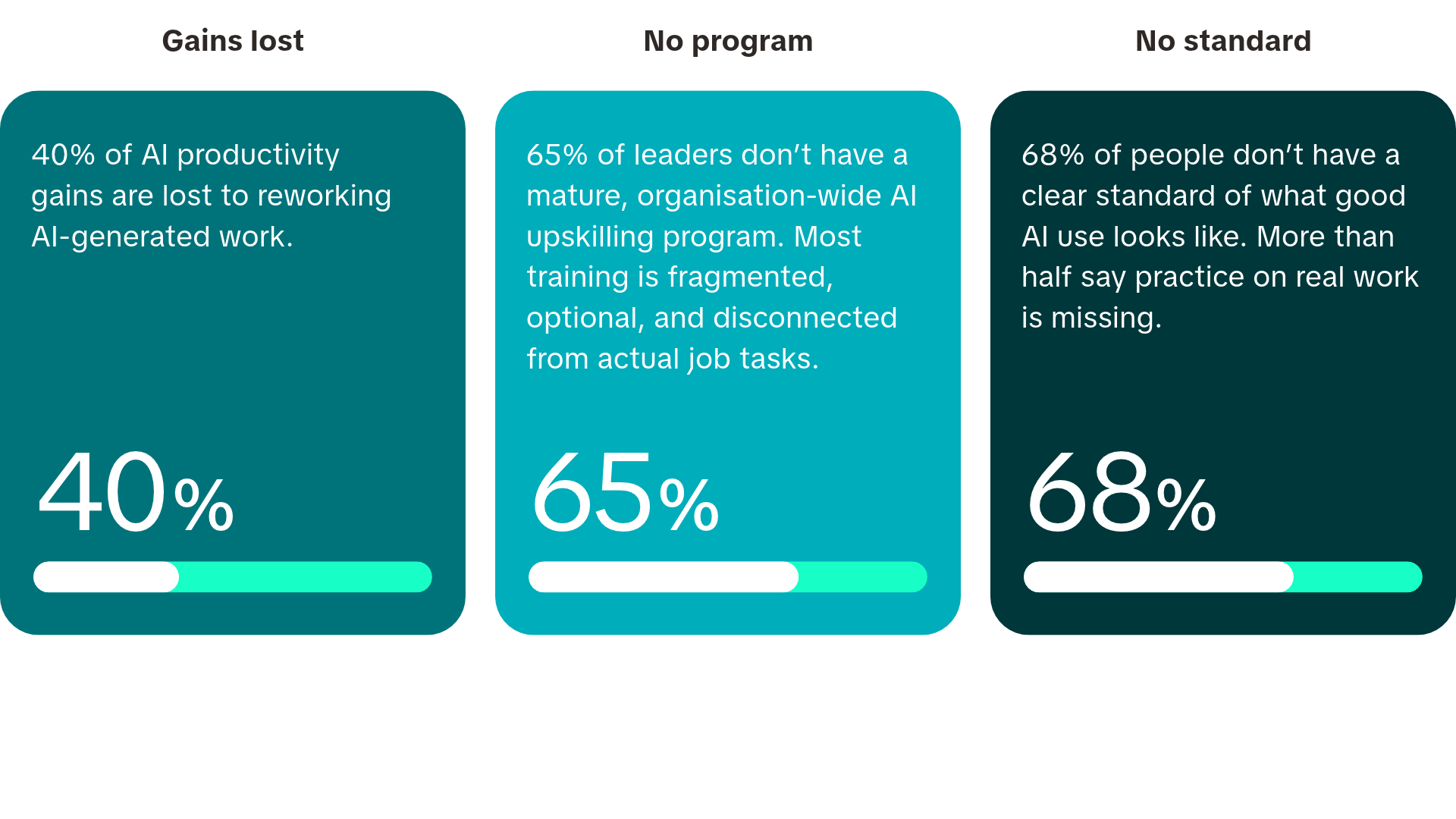
Some people get output good enough to send to a client, colleague or leader. Others don’t. The gap shows up as rework, time lost and average or inconsistent work.
Magneto Mentor AI is for enterprise teams and their leaders who want a consistent and practical approach to ‘learn-by-doing’ AI upskilling.
Whatever the industry, whatever the team, whatever the level:
- Existing AI users: Rapidly upskill to building AI instructions, workflows and agents that are aligned to company standard. Learn by building real work.
- Advanced AI users: Create better workflows, faster and to the company standard.
- New starters? Instantly understand ‘how we AI here’.
| Team | Regular work | What Magneto Mentor delivers |
|---|---|---|
| Finance, audit and risk | Credit memos, risk assessments, variance commentary, audit responses. Summarising long reports, comparing scenarios, extracting risk themes from incident logs, preparing questions before an audit meeting. | Instructions that make AI show its reasoning and flag what it could not verify, so analysis is safe to build a recommendation on. |
| Legal, governance and company secretariat | Board and committee papers, policies, regulator correspondence. Reviewing long documents for issues, summarising regulatory change, comparing contract versions, pulling themes from board feedback. | Papers that survive a board read, with legal wording left exactly as drafted. Review instructions that name what to look for and what to ignore, so nothing important gets summarised away. |
| Operations and project delivery | Status reports, business cases, incident reviews, change requests. Synthesising updates across workstreams, analysing incident patterns, comparing supplier responses, preparing steering committee questions. | One format every project uses, so a steering committee compares like with like instead of reading eight different styles. |
| Engineering and technical leadership | Post-incident reviews, technical briefs for executives, safety and compliance reporting. Summarising documentation, analysing failure data for patterns, assessing vendor technical responses. | Technical accuracy an executive can act on. Instructions that hold precision through translation, so the version the business reads still means what the engineer meant. |
| Organisational development, Learning & Development, People & Culture | Policy updates, restructure and change communication, performance documentation. Analysing engagement survey comments, summarising policy research, preparing leader talking points. | Sensitive messages handled with care and consistency, so all people leaders deliver messages the same way. |
| Government and policy | Briefings, ministerial correspondence, submissions, cabinet material. Synthesising consultation responses, preparing question briefs. | Plain English at the standard your department requires. Instructions that keep evidence traceable to its source. |
| Sales, bid and client teams | Proposals, tenders, client updates, executive summaries. Analysing tender requirements, researching prospects, comparing competitor positioning, pulling themes from client feedback. | One voice across every document a client sees. Commercial, persuasive and consistent, whoever drafted it. |
| Executive and senior leadership | Strategy papers, all-staff updates, investor and stakeholder communication. Working through long board packs, pressure-testing an argument, preparing for difficult conversations. | Drafting that sounds like you and holds the organisation's standards. Thinking that challenges a position before a board does, so the argument is tested before it’s presented. |
| The team that owns the voice and standards right now | ||
| Marketing, communications and PR | Campaign copy, media responses, internal announcements, executive ghost-writing. Analysing audience research, testing messaging angles, adapting one message across channels, reviewing draft copy against brand standards. | Brand voice that holds when the whole organisation is drafting, not only your team. Standards your specialists build once and everyone else inherits. |